Alphabet’s (NASDAQ:GOOG) (NASDAQ:GOOGL) Waymo just delivered a major wake-up call to the autonomous vehicle market. In one of the largest funding rounds in self-driving history, Waymo reportedly raised $16 billion, pushing its valuation to roughly $126 billion—nearly triple its value just 16 months earlier. The capital injection gives Waymo the resources to expand into more than 20 new cities, strengthen its fleet operations, and accelerate commercialization.
For Tesla (NASDAQ:TSLA) investors, this is not just an interesting headline—it’s a competitive threat that could reshape expectations for robotaxi leadership. The Waymo funding impact on TSLA stock is now front and center because Tesla’s valuation relies heavily on future autonomy and AI-driven services, not just car sales.
So, should February 2026 be a moment to trim exposure, or is the market overreacting?
Waymo’s Momentum Raises the Competitive Stakes
Waymo’s latest funding round signals strong institutional confidence that its technology is already working at scale. Unlike many autonomous vehicle startups that remain stuck in testing phases, Waymo has built a meaningful commercial footprint. The company is reportedly delivering hundreds of thousands of weekly rides across major operating regions, reinforcing the idea that robotaxis can be deployed today—not years from now.
That reality matters for Tesla because Tesla’s autonomy story has long been a key pillar of the bull case. Investors have priced in a future where Tesla becomes a dominant robotaxi operator, generating high-margin recurring revenue that dwarfs traditional auto profits.
But if Waymo is expanding quickly and securing enormous financial backing, the Waymo funding impact on TSLA stock could be that Tesla faces tougher odds of winning the robotaxi race outright.
Tesla’s Valuation Still Depends on Big Future Bets
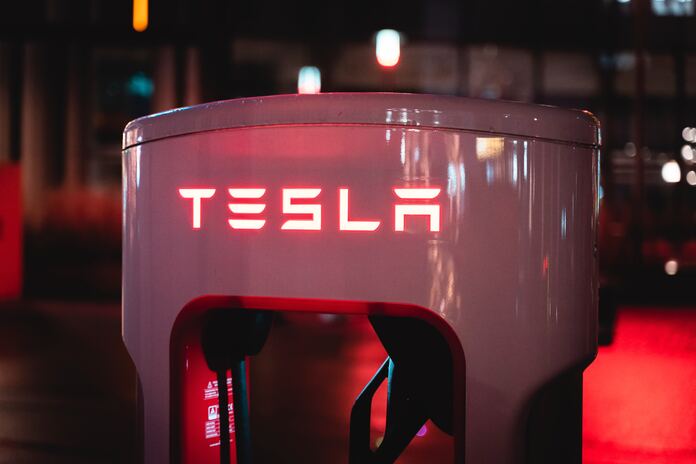
Tesla is more than an automaker. The company designs and sells electric vehicles (EVs), but it also operates major clean energy and storage businesses through products like Powerwall and Megapack. It has built a global network of manufacturing sites, showrooms, service centers, and Supercharger infrastructure.
However, Tesla’s market value—around $1.6 trillion—implies investors expect much more than steady EV sales. At today’s pricing, the market is valuing Tesla as a future autonomy, robotics, and AI platform leader.
That’s where the Waymo funding impact on TSLA stock becomes critical: if the robotaxi market becomes more competitive or slower to monetize, Tesla’s premium valuation could look stretched.
Tesla shares recently closed around $405, sitting below their 52-week high near $499. The stock remains volatile, swinging between optimism on autonomy progress and concerns about weakening auto fundamentals.
Tesla’s Core Auto Business Is Facing Headwinds
Tesla’s recent financial performance shows why some analysts are cautious. In Q4 2025, Tesla reported total revenue of $24.9 billion, down about 3% year-over-year. Automotive revenue fell even more sharply, dropping roughly 11% to $17.7 billion, reflecting softer demand and pricing pressure.
Energy generation and storage, however, continued to grow strongly, rising around 25% year-over-year. Services and other revenue also increased, showing Tesla still has growth engines outside vehicle sales.
But for now, cars still drive the bulk of Tesla’s revenue and investor perception. And slowing deliveries are a major concern. Tesla delivered 418,227 vehicles in Q4, down about 16% from the prior year. For full-year 2025, Tesla delivered about 1.6 million vehicles, a decline of roughly 9%.
That creates a challenge: when deliveries slow, it becomes harder to justify a valuation that assumes explosive growth. This is another reason the Waymo funding impact on TSLA stock is being taken seriously by the market.
Tesla’s Premium Multiples Leave Little Room for Error
Tesla’s valuation metrics remain extremely rich. TSLA is trading at a very high earnings multiple and a premium sales multiple compared to many peers, signaling investors are paying up for future growth.
The issue is that the “future growth” story increasingly depends on:
-
Full Self-Driving (FSD) becoming widely adopted
-
Robotaxi commercialization happening on a clear timeline
-
Robotics initiatives like Optimus becoming real revenue drivers
With Waymo rapidly scaling and expanding into new cities, Tesla investors may begin questioning whether Tesla’s autonomy advantage is as strong as previously believed. That’s the heart of the Waymo funding impact on TSLA stock: it introduces credible competition at the exact moment Tesla needs confidence and momentum.
Robotaxis and Robotics Could Still Be Tesla’s Wild Cards
Tesla is not standing still. Management has continued to emphasize its pivot toward autonomy, AI infrastructure, and robotics, including plans tied to a Cybercab robotaxi in 2026. Tesla also expects capital expenditures to rise significantly in 2026 as it invests in long-term initiatives.
Analysts are still projecting earnings growth ahead, with expectations that EPS could rebound meaningfully in fiscal 2026 and continue growing in 2027. If Tesla executes well, today’s valuation could still make sense in hindsight.
In other words, the Waymo funding impact on TSLA stock is real—but it doesn’t automatically mean Tesla is losing. It simply raises the bar for execution.
Should You Sell TSLA Stock in February 2026?
Wall Street remains split. Some firms have raised price targets but kept cautious ratings, pointing to Tesla’s valuation as a limiting factor. Overall, TSLA holds a consensus “Hold,” with analysts spread across bullish, neutral, and bearish camps.
For investors, February 2026 may come down to risk tolerance:
-
If you own TSLA for the robotaxi upside, Waymo’s rapid progress is a competitive warning sign.
-
If you own TSLA for long-term AI and platform potential, volatility may be the price of admission.
-
If you want more certainty, trimming into strength could be reasonable given the premium valuation.
Ultimately, the Waymo funding impact on TSLA stock is less about one funding round and more about what it represents: autonomous driving is becoming a real, competitive business, and Tesla may no longer be the only company investors believe can win.
Featured Image: Pexels