VANCOUVER, B.C., October 14, 2026: Gold X2 Mining Inc. (NYSE American: AUXX / TSXV: AUXX / FWB: DF80) (“Gold X2” or the “Company”) is pleased to announce the most recent assays from its ongoing infill drilling program targeting the Main and Southwest Zones at the Moss Gold Project in Northwest Ontario, Canada (the “Moss Gold Project”).
Highlights
- Nine holes were drilled at the Main Zone as part of the ongoing resource infill campaign focused on converting existing Inferred mineralization to Indicated. Infill drilling targeted both core and marginal shear systems returning multiple wide zones of moderate-grade mineralization that show a net positive reconciliation with the resource model. Select results include:
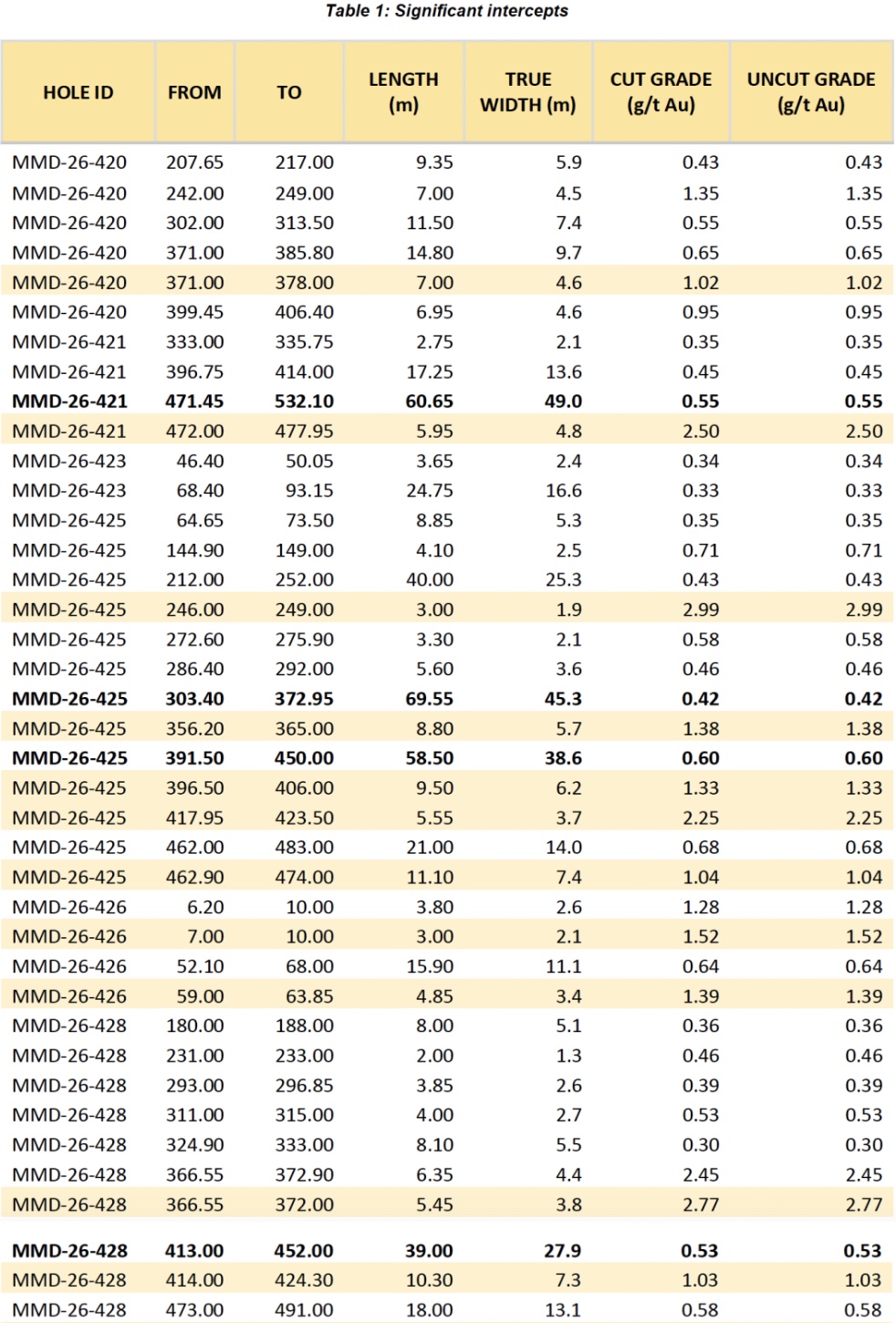
- 69.55m of 0.42 g/t Au from 303.4m in MMD-26-425, and
- 58.5m of 0.60 g/t Au from 391.5m
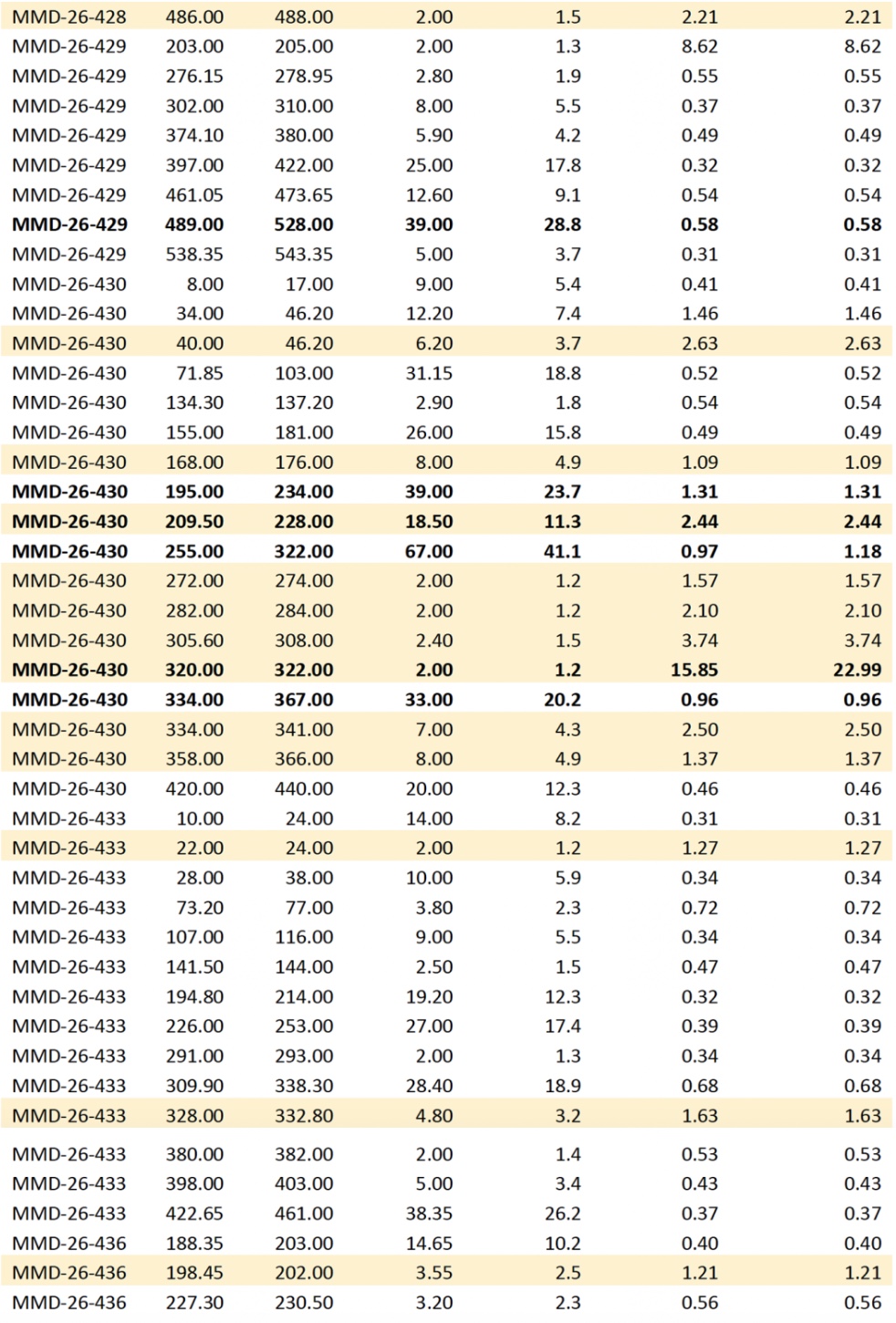
- 172.0m of 0.96 g/t Au from 195.0m in MMD-26-430, including
- 39.0m of 1.31 g/t Au from 195.0m, including
- 18.5m of 2.44 g/t Au from 209.5m, and
- 67.0m of 0.97 g/t Au (1.18 g/t Au uncut) from 255.0m, including
- 2.0m of 15.9 g/t Au from 320.0m, and
- 33.0m of 0.96 g/t Au from 334.0m
- 39.0m of 1.31 g/t Au from 195.0m, including
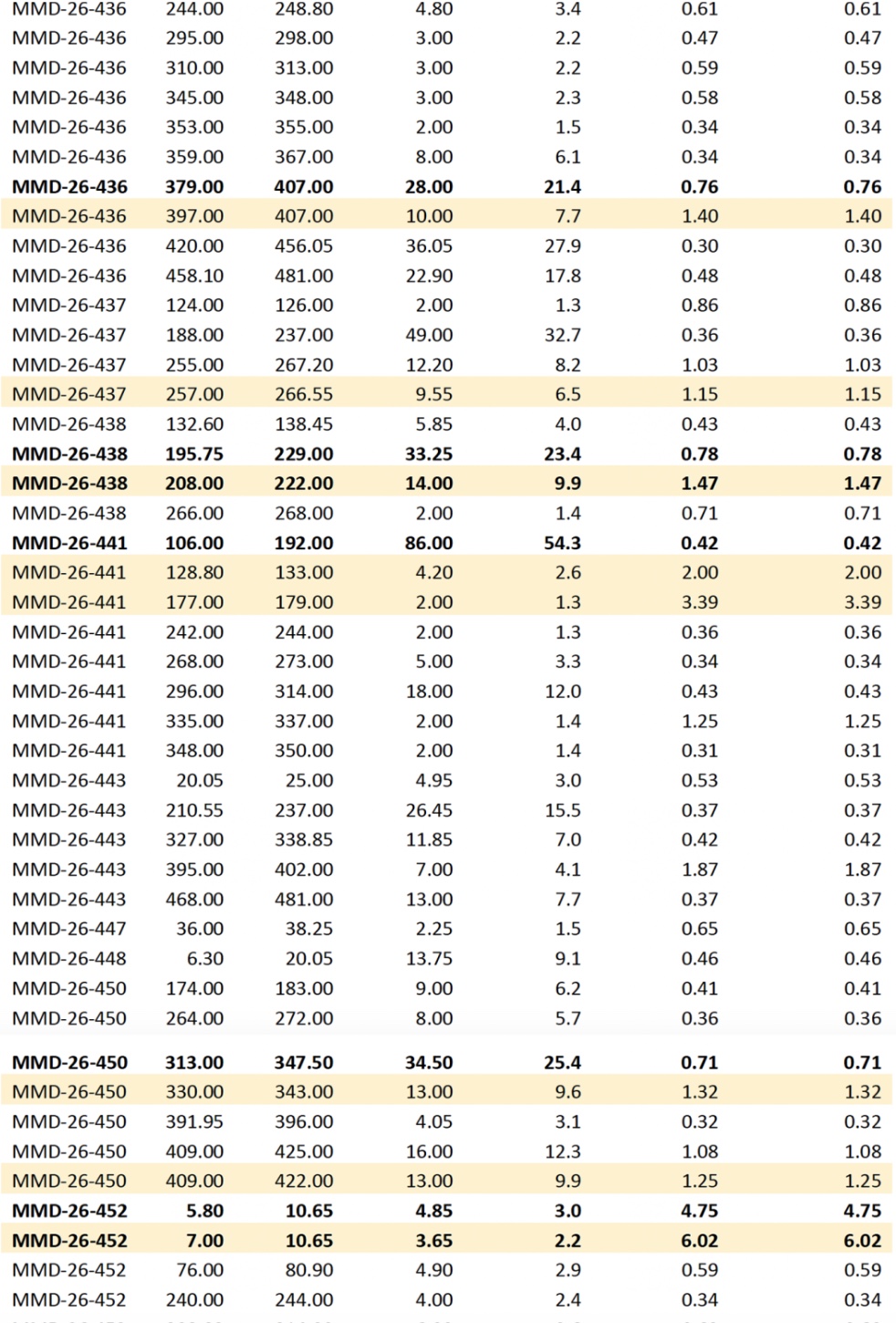
- 4.85m of 4.75 g/t Au from 5.8m in MMD-26-452
- 11.4m of 1.84 g/t Au from 213.6m in MMD-26-454, and
- 130.95m of 0.55 g/t Au from 353.05m, including
- 21.45m of 1.14 g/t Au from 359m
- Twelve holes were drilled at the Southwest Zone, as part of the ongoing resource infill campaign. The infill drilling continued to intersect expected wide zones of moderate-grade mineralization favorable for open-pit mining again showing a net positive reconciliation with the resource model. Select results include:
- 60.65m of 0.55 g/t Au from 471.45m in MMD-26-421
- 39.0m of 0.53 g/t Au from 413.0m in MMD-26-428
- 39.0m of 0.58 g/t Au from 489.0m in MMD-26-429
- 28.0m of 0.76 g/t Au from 379.0m in MMD-26-436
- 33.25m of 0.78 g/t Au from 195.75m in MMD-26-438, including
- 14m of 1.47 g/t Au from 208.0m
- 86.0m of 0.42 g/t Au from 106.0m in MMD-26-441
- 34.5m of 0.71 g/t Au from 313.0m in MMD-26-450
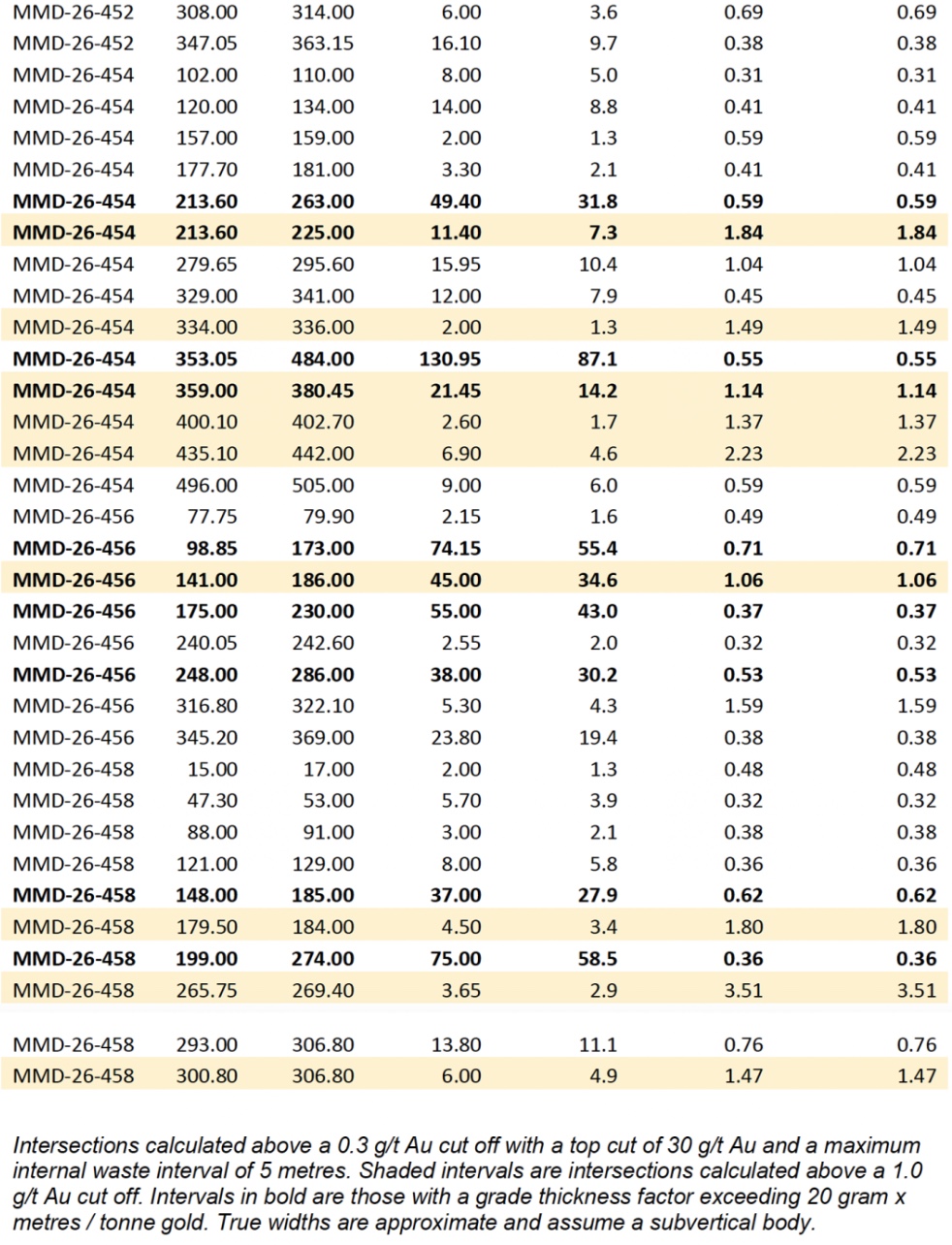
- 74.15m of 0.71 g/t Au from 98.85m in MMD-26-456, including
- 45m of 1.06 g/t Au from 141m, and
- 55.0m of 0.37 g/t Au from 175.0m, and
- 38.0m of 0.53 g/t Au from 248.0m
- 37.0m of 0.62 g/t Au from 148.0m in MMD-26-458, and
- 75.0m of 0.36 g/t Au from 199.0m
Technical Overview
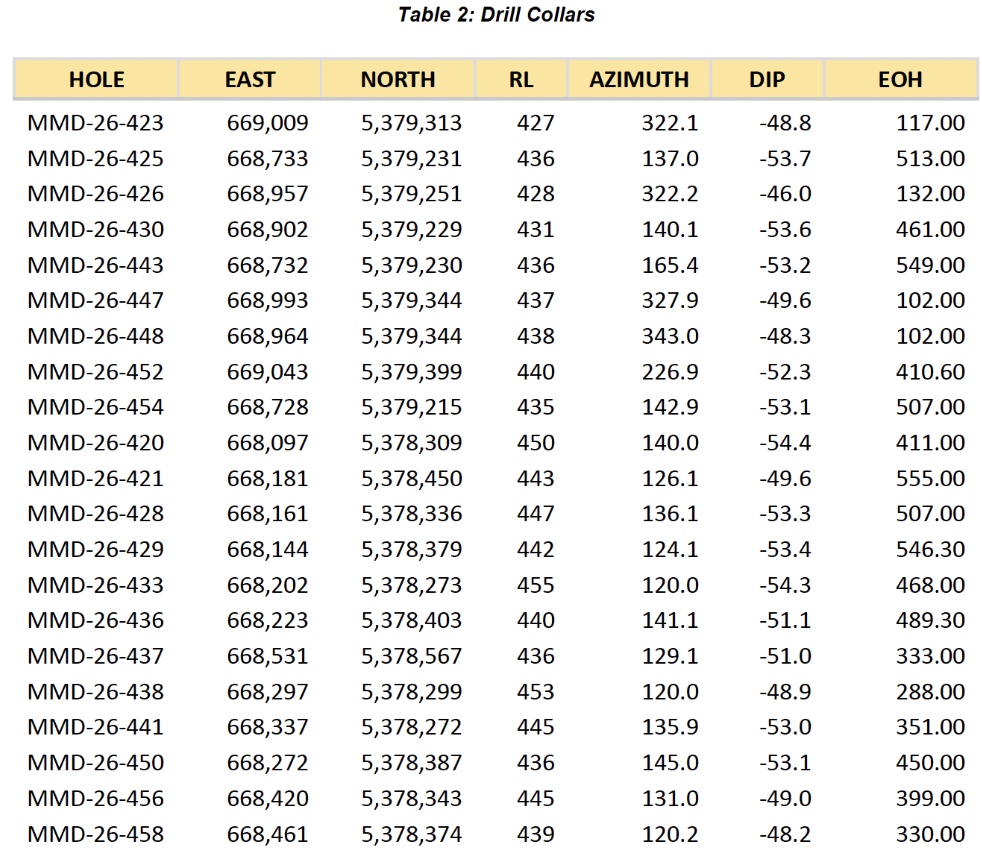
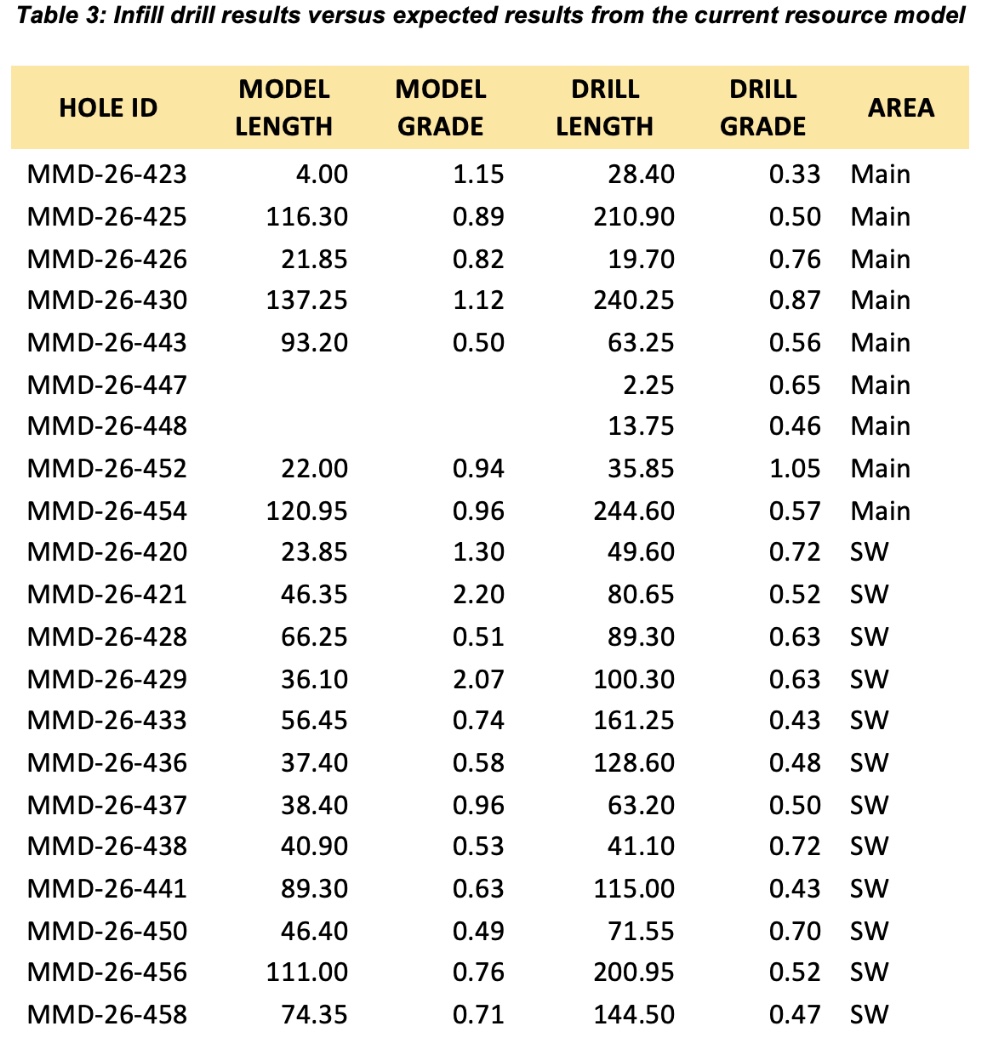
The results of the twenty-one holes drilled into the Main and Southwest Zones are illustrated in the following figures and tables. Figure 1 shows the location map of the drill holes reported in this release. Figure 2 provides a cross-section through drill hole MMD-26-415. The results are summarized in Tables 1 to 3, which include significant intercepts (Table 1), drill hole locations (Table 2) and the reconciliation between actual drill intercepts and those predicted by the current resource model (Table 3).
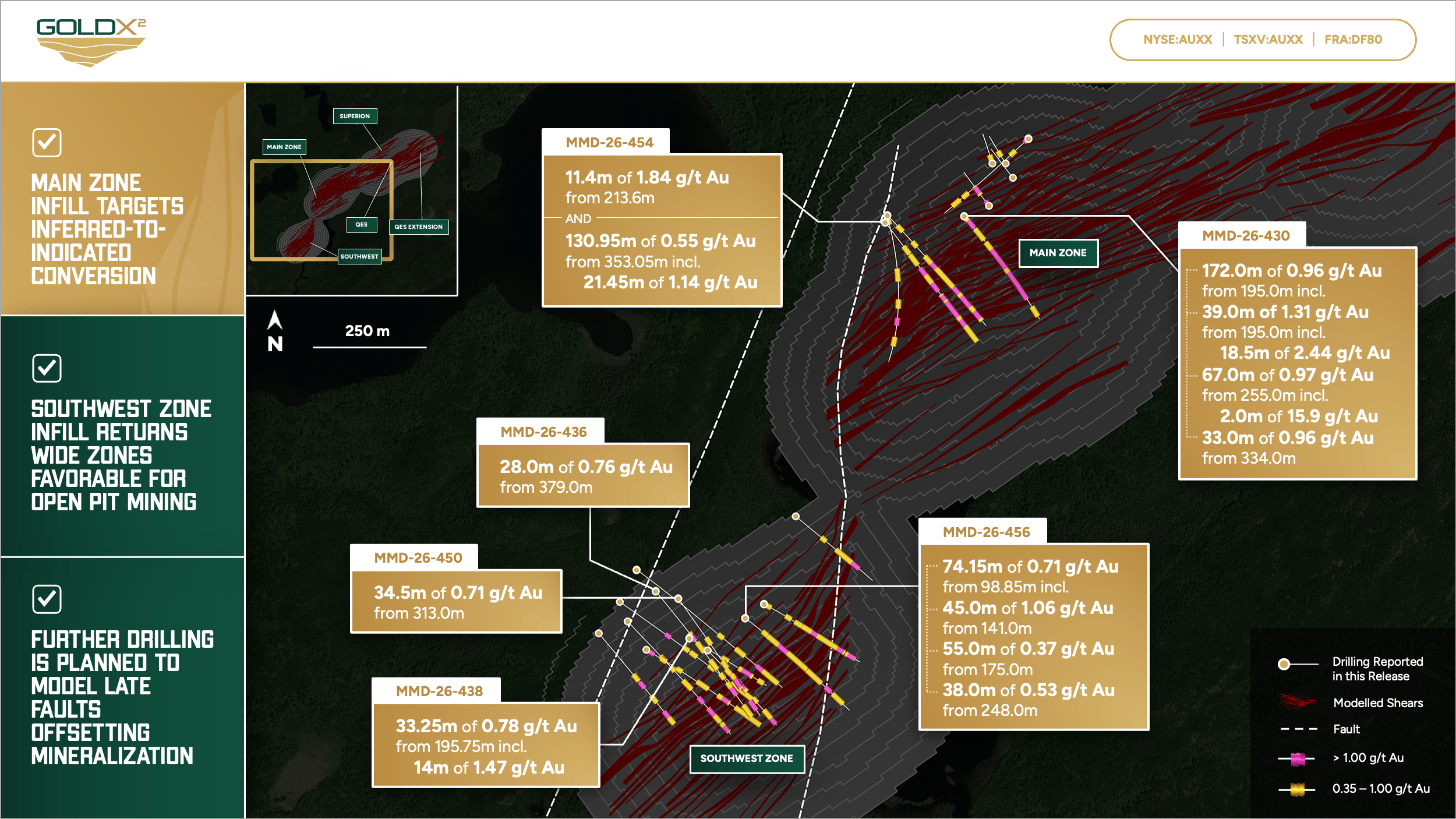
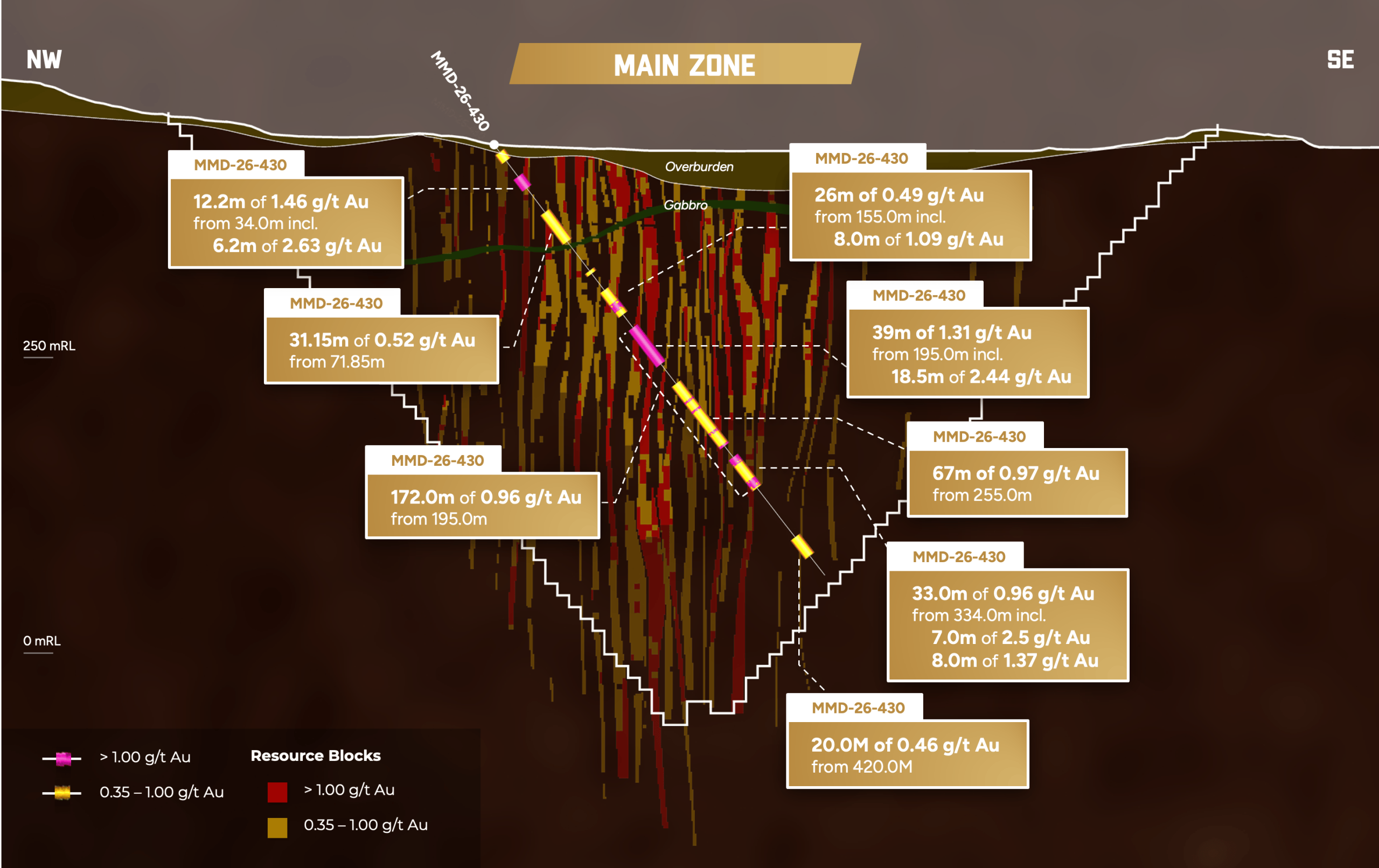
Gold X2 continues its deposit-wide infill drilling and resource expansion programs designed to upgrade in-pit Inferred resource blocks to Indicated and expand the overall mineral resource inventory of the Moss Gold Project. Twenty-one holes were drilled, nine as part of the infill of the Main Zone and twelve infilling the Southwest Zone. The drill hole plan was optimized in three dimensions using AI software to minimize the drilling requirements and maximize the conversion rate. Several of these holes are planned at differing azimuths rather than on the established drill grid, targeting multiple shallow marginal shears. These include MMD-26-423, MMD-26-426, MMD-26-447, and MMD-26-448, which are drilling away from the Main Zone and MMD-26-452, which is drilling subparallel to the Main Zone.
The nine Main Zone holes largely encountered expected geological sequences as outlined by the geological model. The additional holes have allowed for a refinement of the northern diorite-dacite contact and the northern porphyritic diorite intrusion, both of which have had limited drill intercepts. The shear zone model continues to successfully predict the location of the mineralized core shears with marginal shears showing less predictability but within a 10m accuracy.
Hole MMD-26-433 failed to locate the core shear system along the boundary of the Snodgrass Fault. Further drilling is planned to properly model the position of the late faults that offset mineralization. The core shears of the Main Zone continue to correlate with the sericite-silica-hematite sheared granodiorite and diorite units.
Twelve holes were drilled to infill the Southwest Zone, which encountered the expected geological package of massive dacitic volcanics and flow breccias intruded by a large variably altered diorite complex. The lithological units do not appear to fold into the Snodgrass Fault as gradually as modelled with the deformation appearing more sudden than anticipated. Holes MMD-26-437, -442, and -458 were drilled across the Snodgrass Fault, encountering 5-15m wide zones of annealed fault breccia. The shear model predicts narrower shears than was intercepted with mineralization occurring in 20-80m wide, weakly sheared, sericite-silica-chlorite altered diorites containing localized higher grade discrete shears ranging from 10-30cm wide.
The nine infill holes drilled at the Main Zone intersected mineralized shears that are 67% wider than modelled but contain 28% lower grades. The twelve infill holes drilled at the Southwest Zone intersected mineralized shears that are 87% wider than modelled but contain 39% lower grades. This reflects the significant addition of lower-grade secondary shears in between the primary shears, which were modelled as waste and therefore excluded from the current Mineral Resource Estimate and discovery of additional marginal shears beyond the primary shear system. The drilling results therefore exhibit a net positive reconciliation when compared to the MRE.
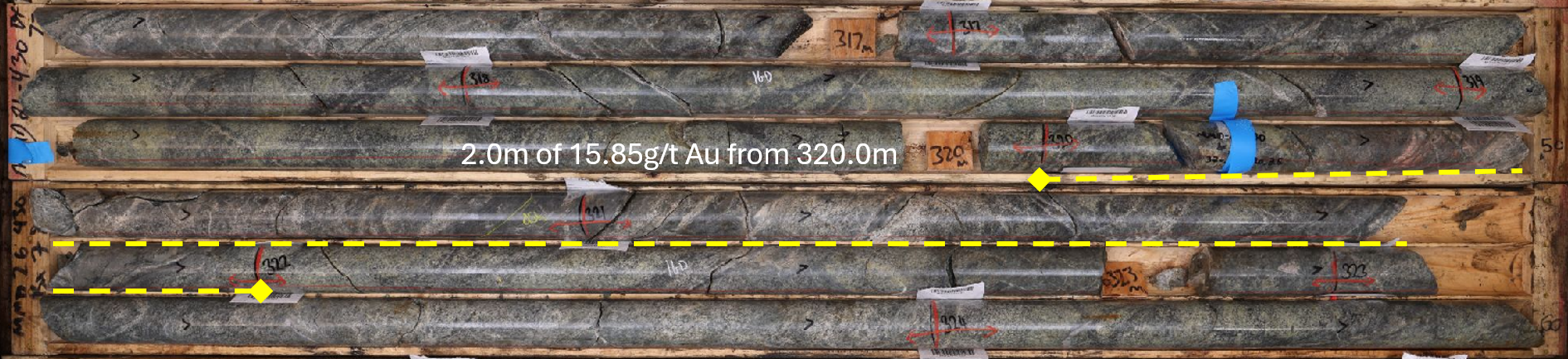
Figure 3: Hole MMD-26-430: Moderate sheared diorite with intense sericite-silica-chlorite alteration containing 5% py-cp bearing quartz carbonate veins with an intercept of 2.0m of 15.85 g/t Au (22.99 g/t Au uncut) from 320.0m, part of the greater intercept of 67.0m of 0.97 g/t Au (1.18 g/t Au uncut) from 255.0m.
Analytical and QA/QC Procedures
All drill core is NQ diameter drill core has been visually validated in the core shack, rotated, and reconnected. Structural orientation data was captured by acoustical and optical televiewer operated by DGI Geosciences. All core has been sawed in half cut just off a geologist established cutline aligned 90° from the apex of the foliation, with the right half (looking down hole) of the core bagged and sent a third-party analytical laboratory. The left half of the core was returned to core boxes and is stored at Gold X2’s Kashabowie core yard facility.
All samples were sent to Paragon Geochemical in Timmins for sample preparation. Samples were analysed for gold via PhotonAssay™ (“PA-AU02”) by Paragon’s laboratory in Hamilton and then shipped to Activation Laboratories (ActLabs) Ancaster for 60 pathfinder elements via ICP-MS after four-acid digestion (“UT-6”). Paragon and ActLabs are accredited by the Standards Council of Canada (SCC) for the Accreditation of Mineral Analysis Testing Laboratories and CAN-P-4E ISO/IEC 17025.
In addition to Paragon quality assurance / quality control (“QA/QC”) protocols, Gold X2 has implemented a quality control program for all samples collected through the drilling program. The quality control program was designed by a qualified and independent third party, with a focus on the quality of analytical results for gold. Analytical results are received, imported to our secure on-line database and evaluated to meet our established guidelines to ensure that all sample batches pass industry best practice for analytical quality control. Certified reference materials are considered acceptable if values returned are within three standard deviations of the certified value reported by the manufacture of the material. In addition to the certified reference material, certified blank material is included in the sample stream to monitor contamination during sample preparation. Blank material results are assessed based on the returned gold result being less than ten times the quoted lower detection limit of the analytical method. The results of the on-going analytical quality control program are evaluated and reported to Gold X2 by Orix Geoscience Inc.
Qualified Person
Peter Flindell, PGeo, MAusIMM, MAIG, Chief Operating Officer, of the Company, and a qualified person under National Instrument 43-101 – Standards of Disclosure for Mineral Projects, has approved the scientific and technical information contained in this news release.
Mr. Flindell has verified the data disclosed. To verify the information related to the winter drill program at the Moss Gold Project, Mr. Flindell has visited the property several times; discussed and reviewed logging, sampling, bulk density, core cutting and sample shipping processes with responsible site staff; discussed and reviewed assay and QA/QC results with responsible personnel; and reviewed supporting documentation, including drill hole location and orientation and significant assay interval calculations. He has also overseen the Company’s health and safety policies in the field to ensure full compliance, and consulted with the Project’s host indigenous communities on the planning and implementation of the drill program, particularly with respect to its impact on the environment and the Company’s remediation protocols.
About Gold X2 Mining
Gold X2 is a growth-oriented gold company focused on delivering long-term shareholder and stakeholder value through the acquisition and advancement of primary gold assets in tier-one jurisdictions. The Company’s current focus is the advanced stage 100% owned Moss Gold Project which is positioned in Ontario, Canada, with direct access from the Trans-Canada Highway, hydroelectric power near site, supportive local communities and skilled workforce. The 2026 updated National Instrument 43-101 – Standards of Disclosure for Mineral Projects (“NI 43-101”) mineral resource estimate (“MRE”) for the Moss and East Coldstream Deposits has expanded to 2.458 million ounces of Indicated gold resources at 1.04 g/t Au, contained within 73.8 million tonnes and 4.209 million ounces of Inferred gold resources at 0.97 g/t Au contained within 134.7 million tonnes. The Moss Deposit also has a silver MRE of 3.160 million ounces of indicated silver resources at 1.53 g/t Ag contained within 64.3 Mt and 6.273 million ounces of inferred silver resources at 1.55 g/t Ag contained within 125.9 Mt. Results of a preliminary economic assessment (“PEA”) of the Moss Gold Project suggest the potential for the deposit to support a long-life mining operation with a strong production profile and low production costs. The MRE and PEA are supported by a NI 43-101 technical report for the Moss Gold Project available on the Company’s website and under the Company’s issuer profile on SEDAR+. For more information, please visit SEDAR+ (www.sedarplus.ca) and the Company’s website (www.goldx2.com).
Peter Flindell, PGeo, MAusIMM, MAIG, Chief Operating Officer, of the Company, and a qualified person under NI 43-101, has approved the scientific and technical information contained in this news release.
For More Information – Please Contact:
Michael Henrichsen
President, Chief Executive Officer and Director
Gold X2 Mining Inc.
E: [email protected]
W: www.goldx2.com
T: 1-604-404-4335
Featured Image @ Freepik